Stop Being Fooled by Fabric Specs: The 5 Core Yarn Spinning Methods That Change Everything
Stop Being Fooled by Fabric Specs: The 5 Core Yarn Spinning Methods That Change Everything
Buying clothes just because the label says 100% cotton is rookie level. The exact same cotton processed through different spinning methods results in completely different textures durability and price tags. Here is the breakdown of the five mainstream spinning techniques dominating the textile industry
Ring Spinning
This is the oldest most versatile and still dominant method for high end markets.
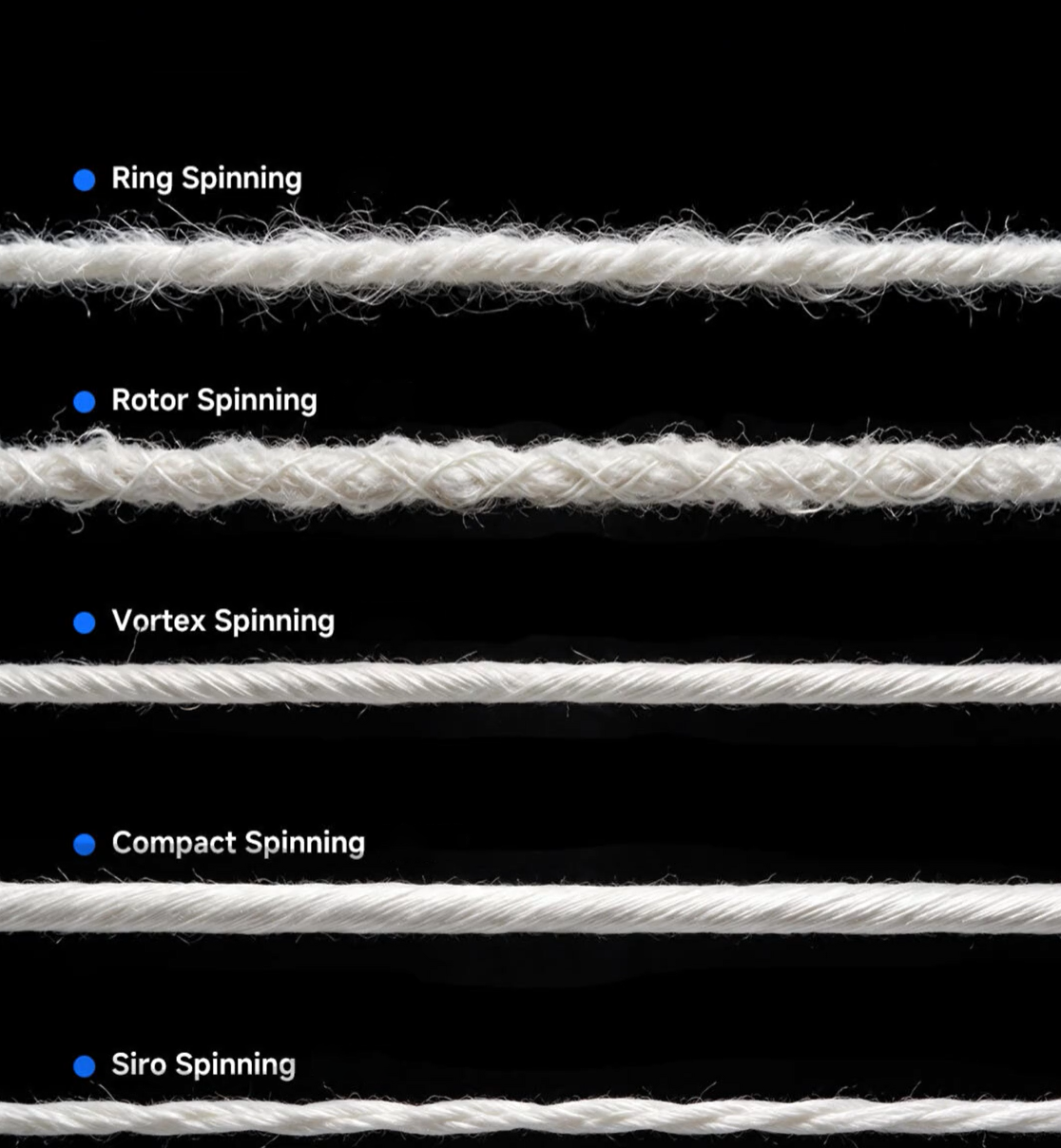
Process: Roving is drafted and fed through a spinning triangle where a traveler rotates around a ring at 15000 to 25000 RPM to twist fibers into yarn while internal fibers constantly shift back and forth.
Structure: Noticeable surface hairiness creating a fuzzy halo with uniform twist distribution.
Pros: High tensile strength tight fiber cohesion natural softness elasticity and wide compatibility with almost all fiber types and counts.
Cons: Long production process with low output speeds and high hairiness requiring subsequent singeing or sizing.
Typical Uses: Premium dress shirts combed knitwear luxury bedding and sewing threads.
Rotor Spinning
This is the highest volume and most economical spinning method using centrifugal force and high speed airflow.
Process: An opening roller breaks sliver into individual fibers and high speed airflow sends them into a rotor spinning at over 150000 RPM to condense and twist them into yarn 5 to 8 times faster than ring spinning.
Structure: A distinct core sheath structure with a tightly twisted core and wrapped outer fibers featuring short surface fuzz and a stiffer feel
Pros: Extremely high production speed skips the roving process completely and offers exceptional abrasion resistance.
Cons: Lower strength than ring spinning by 15 to 25 percent stiffer hand feel and limited to medium and low counts from Ne 6 to 40.
Typical Uses: Denim jeans canvas towels workwear and heavy knit fabrics.
Vortex Spinning
This newer technology replaces mechanical twisting components with high speed swirling airflow.
Process: Drawn sliver enters a vortex tube where high speed airflows blow the trailing ends of fibers to wrap around a core fiber bundle before direct winding.
Structure: Smooth and crisp surface with virtually zero hairiness and tightly wrapped outer fibers.
Pros: Blazing fast output speeds reaching 400 to 500 meters per minute minimal hairiness strong anti pilling performance and excellent moisture wicking.
Cons: Slicks and slippery hand feel lacking natural softness lower strength than compact spinning and optimized mainly for blends rather than pure cotton high counts
Typical Uses: Activewear uniforms bedsheets casual knit outerwear and socks.
Compact Spinning
This is an advanced upgrade of ring spinning engineered to eliminate the spinning triangle entirely.
Process: A negative pressure suction zone is added right after the front rollers to immediately condense flatten and parallelize fibers before they reach the twisting point.
Structure: Extremely clean surface with almost zero hairiness highly parallel fibers and a tight dense structure.
Pros: Reduces hairiness by over 80 percent compared to ring spinning delivers the highest single yarn strength and provides superior wear resistance.
Cons: High equipment and energy costs sensitive to mill temperature and humidity and a slightly firmer hand feel.
Typical Uses: Top tier dress shirts high density fabrics medical gauze and premium knit underwear.
Siro Spinning The Two in One Cheat Code
This special variation integrates a two strand plied effect directly on a ring spinning frame in a single step.
Process: Two parallel roving strands are fed with a slight spacing receiving individual minor twists before merging and twisting together downstream.
Structure: Clean surface with minimal hairiness showing a clear double helix structure like two fine yarns gently twisted together
Pros: Eliminates separate plying processes exceptional yarn evenness softer hand feel than traditional plied yarns and enables unique A B dual color twist effects.
Cons: Strict raw material and process requirements risk of single strand running defects and higher equipment modification costs.
Typical Uses: Lightweight luxury wool sweaters fine worsted shirt fabrics and high end color woven textiles.
-400x400.webp)